Common question number 1. Do I need a new shoe or a cycling orthotic to help my foot pain?

When we have clients book an online appointment at our Milton headquarters, or in one of our satellite locations at North West Physiotherapy, the most common added note to the booking is “I’m not sure if I need new shoes or whether the problem is coming from my feet”. This is an entirely appropriate question to ask and one which requires a little bit of analysis on our end to work out a solution. However there are a few clues as to where your problems are coming from.

Typically as we progress through the sport of cycling, our duration and frequency of activity increases. The toughness of the terrain also changes enormously as our confidence grows. I’m often surprised how quickly some riders progress from beginners to Gran Fondo warriors! (You know who you are guys) Cycling is certainly a sport that rewards you for your endeavours. That said, as we build our volume of riding the risks of developing issues with our shoes also grows.

Typically feet begin their pathway to pain insidiously. The exact timing isn’t always clear yet once a pattern emerges, the trend becomes very strong. That said if you change your shoes and the pain commences it’s highly likely the shoes are responsible! Aside from that simple scenario shoes can still be to blame if your volume increases to a point where you begin to feel discomfort on longer rides.

Some signs that it is likely the shoes are causing the problem are:

  • Numbness in your toes or the ball of the foot on longer rides

  • Isolated pressure points in the upper of the shoe

  • The sensation that your feet are swimming in the shoe causing your toes to claw down

  • Heel slippage

  • Reaching the limit of tension on your closure system (either maxed out or dialled in)

  • Red marks on bony prominences after your shoes come off

  • A sloppy foot feel inside the shoe

  • Pain which has gradually emerged as a shoe has become older and more worn out

  • Painful toes especially the little toes

  • Sore bunions on the inside or the outside of your foot

There are instances where the foot pain is caused by both foot issues and the shoe being inappropriate. In these cases working on a solution for both will likely get the best outcome. Generally when we do this we will tick off one box at a time to ensure we are getting an outcome clearly defined by the variable we have changed and avoiding confusion. I also find many clients who typically wear orthotics inside their normal shoes benefit somewhat when we create a cycling orthotic solution as well.

In either case, if you are getting pain in your feet when you ride, let us know and I am confident we can find a solution. All our shoe fitting takes place on the indoor trainer to ensure we are spot on and ready to roll. We also have a fantastic relationship with Lake Shoes internationally and Cobra9 Cycling Orthotics that allows to create awesome solutions for all cyclists.

Nathan White Podiatrist
unspecified.jpeg


Earn Your Aero

Muscle Flexibility and Spinal Mobility

The optimal time trial position in cycling is one that best balances your body, your bike and your event distance. Once these 3 factors have been addressed, you have a baseline in which fit progressions can be made over time to achieve an optimal aerodynamic position. It is important to remember that the best cyclists in the world have been working on their aero positions for many years. You too need to earn your position. In working towards optimal aero you need to be aware of, and address, your muscle flexibility, spinal mobility, off the bike strength, current positional sustainability, training capacity/history as well as your event requirements.

A reminder of the ‘simple’ requirements of aero

What can you do ?

Firstly, Here are some simple tests to work out what needs some attention…

Physio+1.jpg

Test Your Range

Firstly, you must simply test your range of flexibility through the hamstrings, calves, glutes, back and shoulders using the forward bend test.

Make sure that you have both feet planted on the floor firmly, and your legs are straight. Make a note of how far you are from the floor and the main areas that you feel tightness.

Next, we will do a Spinal Mobility test. This is a combined measure of muscle flexibility, spinal mobility and ability to control your pelvic and spinal position.

Physio 2.png

Part 1:

Rest your hands on a table or chair with your feet shoulder width apart, knees slightly bent and a flat back. If is not possible to flatten your back, try to identify the muscle group that may be restricting you. Again, this will generally be hamstrings, calves, glutes, back and shoulders. If you are easily maintaining a flat back in this position, move on to Part 2…..

Physio 4.png

Part 2:

Progress to resting your elbows on a table or chair with your feet slightly apart and knees slightly bent. Now can you straighten your back?

Again, identify the muscle group that may be restricting you. Again, this will generally be hamstrings, calves, glutes, back and shoulders.

Let’s start with some basic exercises….

Note: These exercises should be completed ‘pain’ free. 

In saying that, you might feel some discomfort when completing the exercises with the trigger balls. So start easy and gently progress as able.

Complete the exercises regularly (3-4x/week) to achieve progressive gains over time.

Physio 5.png

Hamstring Stretch

Goal: Increase hamstring length to facilitate optimal position on TT bars and reduce spinal stress. Aim for 90 degrees. Hold 30-60 seconds.

Physio 3.png

Downward Dog

Goal: Aim for a triangular shape.

Look at yourself in the mirror side on. Which areas are restricting you from looking like a triangle and are likely to be tight? Calves, hamstrings, glutes, shoulders or spinal stiffness?

Identify where these areas of tightness or weakness are. In our model these are the calves, hamstrings, shoulders.

2 x 30 second holds

Physio 7.png

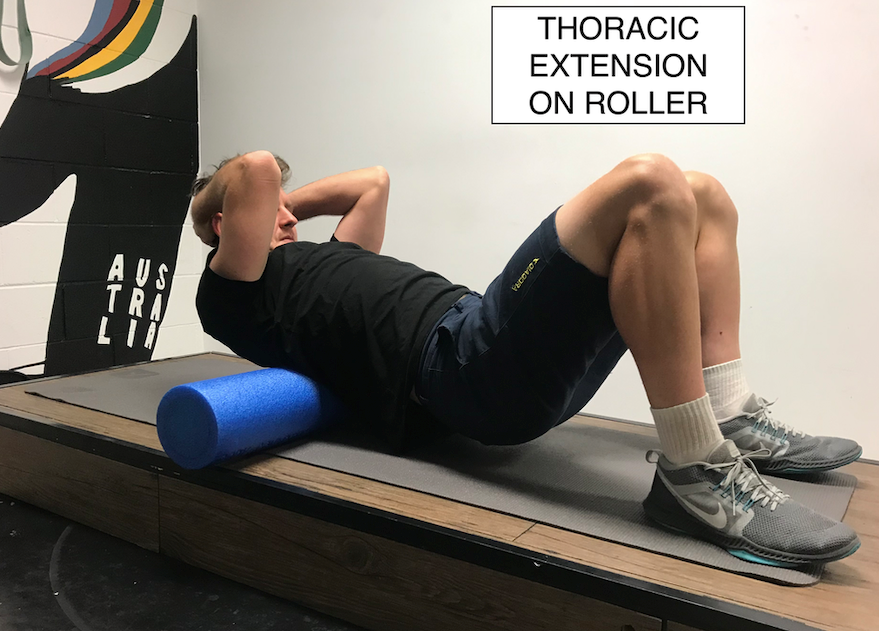
Thoracic Extension On Roller

Goal: Increasing thoracic spine mobility.

Equipment: Foam Roller

Keep chin tucked in and gently extend backwards over the roller. Work your way up from the middle of the back to between the shoulder blades

Physio 8.png

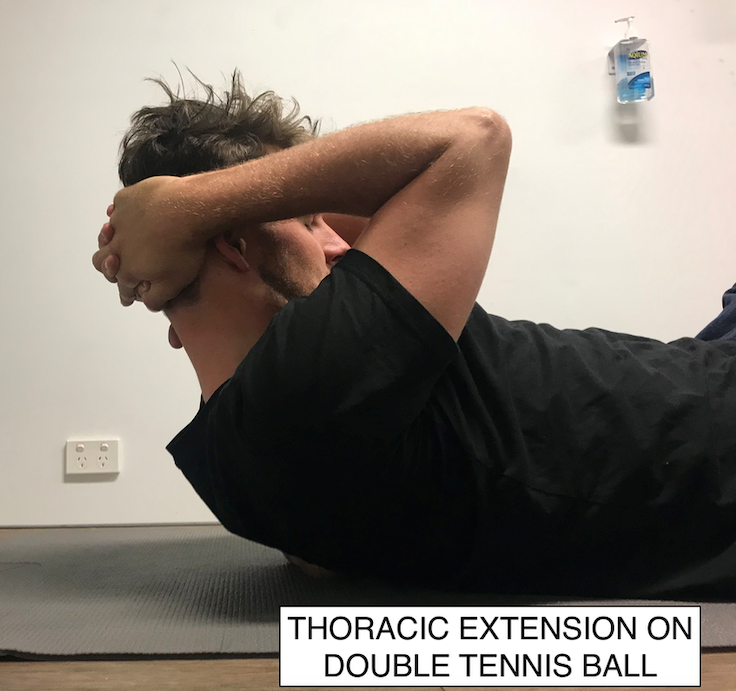
Thoracic Extension on Double Tennis Ball

Goal: Specific thoracic spine joint mobility

Equipment: Two tennis balls taped together

Keep chin tucked on chest. Start with balls under the middle of the back, gently lean into them to reduce muscle tightness or extend over them gently to mobilise the joint. Spend 15 seconds on each spot or more if needed

Physio 9.png

Pec/Chest Stretch on Foam Roller

Goal: Improve thoracic spine extension

Equipment: Foam roller or rolled up towel

Keep back flat on roller and chin tucked in, take arms out to ‘surrender’ position. Hold for 30 seconds or longer as required

Physio 10.png

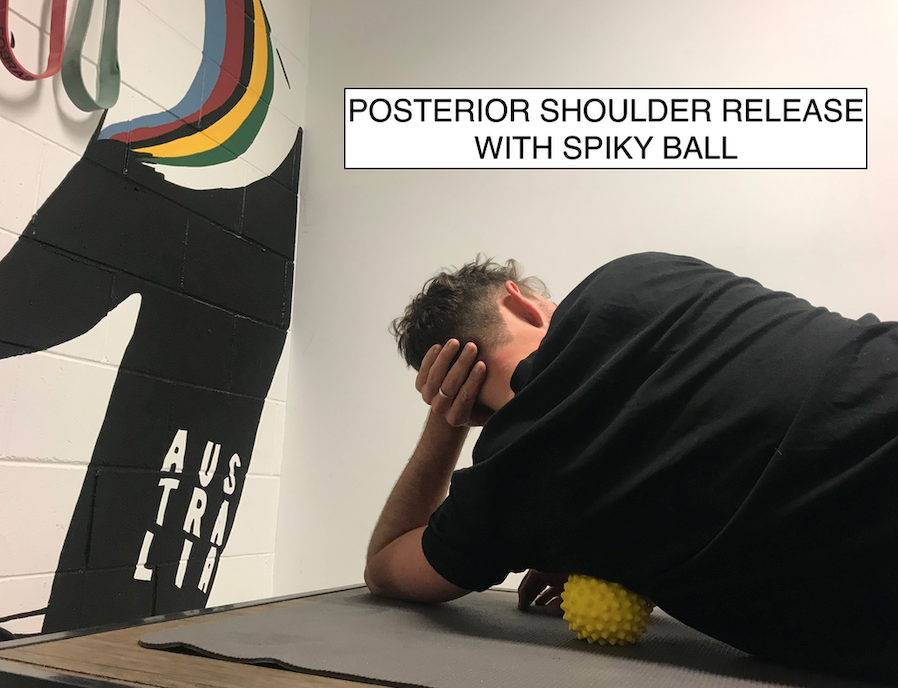
Posterior Shoulder Release

Goal: Reduce tightness at the back of shoulder to improve range of motion in TT position.

Equipment: Spiky ball

Locate sore areas and apply desired pressure on ball until soreness reduces. Move around armpit and back of shoulder to locate tight areas. Work for up to 5 mins.

Remember: everyone has different levels of flexibility. Some people are naturally flexible while others require significant time spent on stretching to achieve noticeable changes.

Brissy is getting cold! Keep Your Immune System Boosted!

18425329_1917857615121313_8369245651624163702_n.jpg

With a lot of endurance events on over the cooler months up here in the Sunshine State, it is important to be aware of your energy levels in order to maintain a strong immune system.

Here are some pointers from Tara, our Dietitian, for keeping your immune system in check in the lead up to race day.

Eat well. A balanced diet is going to support your training and event prep. Enough fuel, fresh food and plenty of colour from vegetables to receive antioxidants is a great start.

Sleep. Make sure that race nerves/ excitement don’t affect your sleep pattern, as this can suppress the immune system.

Don't skip your recovery meals. Even when tapering before an event the nutrition supporting our recovery and replenishing our stores is still very important. Carbohydrates especially help lessen the negative effect stress hormones have on the immune system.

Supplements. For people putting their bodies under high amounts of physical stress, there is a place for a vitamin C, zinc and echinacea supplements.

When looking to build a balanced diet, make sure you are packing in the following vitamins and minerals -

Vitamin C: oranges, kiwifruit, berries, potatoes.

Vitamin E: avocados, almonds, seeds, oats, brown rice

Magnesium: wholegrains, nuts, seeds, leafy green vegetables

Zinc: eggs, turkey, almonds, cashew nuts, oysters

Iron: lean red meat, lentils, chickpeas, cashew nuts, dried apricots, wholegrain bread

B vitamins: lean meats, dairy products, whole grains. (Vitamin B12 is only found in foods of animal origin, so vegans may need to take a supplement or consume foods fortified with vitamin B12)

Omega 3 fatty acids: salmon, mackerel, anchovies, trout, sardines, fresh tuna, ground flaxseed, chia seeds, flaxseed oil, walnuts, pumpkin seeds.

Probiotics: Live yogurt, kefir, kombucha, sauerkraut, sourdough bread, miso soup

CLICK HERE to book in and see Tara for a Dietitics Consultation


Drink Up Buttercup!

By Amie Donlan, Remedial Therapist

Amie Massage 3.jpg

If you have ever had a massage from me, or any other therapist for that matter, then one of the phrases you have almost certainly heard at some point is “make sure you drink plenty of water over the next few days.” It’s not just a helpful tip from a friendly face, it actually relates a lot to your treatment. Let’s delve a little deeper.

First off, regardless of having a massage, you should be drinking water anyway, and probably more than you already are.  Most people don’t drink enough. Plain old, pure water is what it needs to be. None of this “well, there is water in my coffee, so that counts” (or any other daily drinks of yours). Look it’s a coffee from the 4064 boys next door, we might let that slide - but make sure you’re topping up the H2O levels accordingly.

SOME SCIENCY STUFF COMING UP… Just how much should you be drinking?  There are Nutrient Reference Values advising that adult men should drink 2.6 litres of water per day (about 10 cups) and adult women should drink 2.1 litres per day (about eight cups). But these figures are based on the average weight of men and women, so if you’re under or overweight you may consider adjusting your water intake. A general rule of thumb is approx. 35 millilitres of fluid per kilogram of body weight.

Now that you know how much you should be drinking, how does it relate to massage?  First I will talk about healthy vs unhealthy muscle tissue. When your muscles are healthy (hydrated) they feel soft, almost spongy and allows blood to flow freely throughout the vessels.  Unhealthy (dehydrated) muscle tissue is the type that is causing you pain. It is tight, feeling more compact and restricted in movement. What this also means is it also restricts the amount of blood flow and lymphatic drainage through the tissue (by constricting the capillaries).  If you are not getting a good amount of blood flow through an area, this decreases oxygen and nutrient exchange, as well as allowing metabolic waste to build up and become stuck within the tissue. Our bodies are the bloody masters of adaptation, and because of this your blood will go find other, less restricted paths around this area.

When you are having a thorough, deep tissue massage, these areas of restriction and muscle tension are usually the key focal points. The massage therapist is working to break down the adhesion’s that have formed in the unhealthy tissue and BOOM, allowing increased blood flow, increased movement, and restore the muscle to a much more healthy state.  STAY WITH ME… What happens when you open up these areas is that the metabolic waste that had been trapped due to lack of blood flow is now released and on its way out through the lymphatic system. Nutrients and oxygen are being delivered to the muscle at a faster rate, and this all uses water from your bloodstream, which may give you a feeling of dehydration, or thirst.  Similar to why you need more water when working out, your muscles are using more oxygen, and water is necessary for this exchange (so it gets used up faster). An increased amount of metabolic waste is being processed and filtered through the kidneys, which makes them have to work harder and is also using… more water.

If you have ever experienced feeling slightly nauseous, developed a headache, or flu-like symptoms after a massage, this is mainly due to the increased amount of metabolic waste being transported out. Drinking more water after your massage can help reduce those symptoms, or even stop it from happening.

So, it is true you should drink water after massage in order to re-hydrate because your body is using water at a faster rate, but the key is to be drinking enough water EVERYDAY, whether you get a massage or not.  Water is vital for every function that occurs in the body, and necessary to maintain healthy, hydrated muscle tissue.

Book in to see Amie for a massage now!

EOFY Health Funds Reminder - Use it before you lose it

Carbon Fibre Orthotics for running and cycling

Carbon Fibre Orthotics for running and cycling

It’s approaching Jun 30 and for those with Private health Insurance that rolls over at the end of the financial year, now is the time to ensure you get that last massage, physiotherapy, dietetics or podiatry appointment in before it resets again on Jul 1.

It’s also a good time to remind our loyal clients that everyone who has had orthotic therapy with us previously is entitled to one fund only (no gap) set of orthotics a year using the same foot molds. If you are in doubt, fire us an email and we can let you know when you last reviewed with us for your cycling, walking, running or pressure relief orthotics.

If you are after a second set, contact us with your name, details and orthotic request and we can ensure we have the whole process finalised before June 30. If you have other queries, call us on 07 31296331.

Why we stopped putting shoes in our retail space.

Recently we discussed our move to exclusively selling Lake shoes, alongside this shift we have been gradually removing the shoes from the shelves and providing a more intensive shoe fitting service for clients. This might seem confusing and counter intuitive, but there is a good reason why we have done this and the results are encouraging.

Lake CX402s on the feet of Josh Amberger - Photo Mark Fountain

Lake CX402s on the feet of Josh Amberger - Photo Mark Fountain

Cycling shoes are notoriously difficult to fit well. Heavy, unforgiving materials in the uppers combined with stiff soles and a tight fit often cause compression and areas of irritation. As well as this the aesthetics and marketing hype of new products can override good fitting principles and leave customers uncomfortable and unhappy in the long run. When attempting to get the fit right, we have found that professional ‘screening’ of the feet and lower limbs contribute enormously to satisfactory outcomes. At The Pedaler we have experienced Podiatrists with enormous cycling knowledge who have this process perfected.

At The Pedaler we have experienced Podiatrists with enormous cycling knowledge who have this process perfected

Initially we ran a more typical bike store set up. We stocked shoes on shelves and encouraged cyclists to try shoes on with the assistance of our staff. Sometimes the outcomes were satisfactory and in others, less so. Sometimes wasn’t good enough for us, so we decided to only sell shoes once a Podiatrist had given the fit their tick of approval. With this more thorough approach to the process the outcome was always satisfactory.

Hence, we embraced that outcome and changed the way we fit shoes. Rather then have a client spend 45 minutes trying on a range of shoes and becoming increasingly confused, we conduct a foot screening and assessment session with our Podiatrist to guarantee the fit. There is a consult cost for this, but that’s the price for an expert opinion.

This process also enables us to procure any style, size, colour and width option in the ENTIRE Lake range. That’s pretty damned special given just how extensive their range of shoes are.

This also enables us to procure any style, size, colour and width option in the ENTIRE Lake range!

So if you want a pair of guaranteed comfortable shoes, it pays to book in and make a time to get it right.


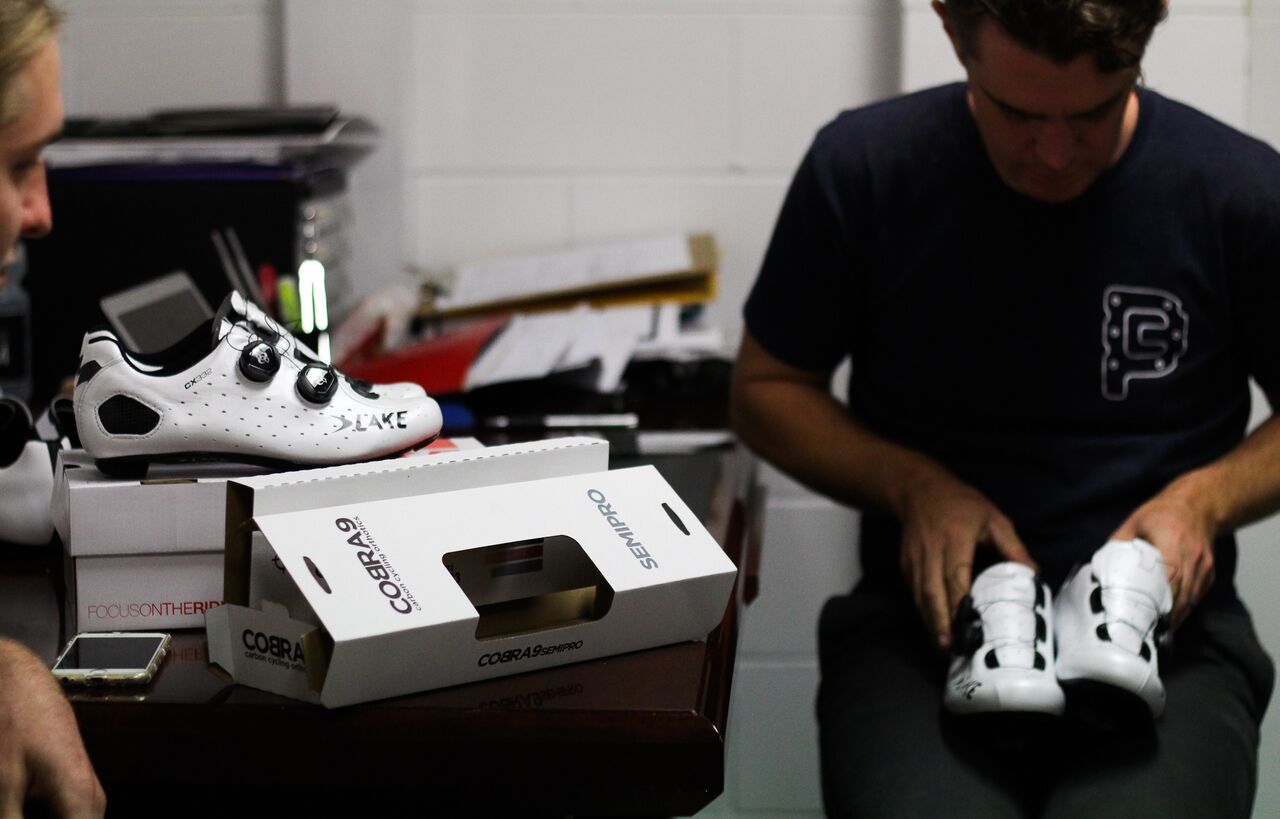
Lake CX332 paired with COBRA9 SemiPro

Lake CX332 paired with COBRA9 SemiPro

Welcome Tara To The Pedaler Health Team!

Tara.jpg

The health team at The Pedaler continues to grow with the arrival of Tara, our new resident Dietitian!

Tara has many years experience in dietetics, guiding the nutritional journey of officers with the Australian Defence Force, the QLD state Hockey, Water Polo, Judo and Rowing teams, and many individuals achieving extraordinary outcomes in endurance sports. Tara is passionate about helping patients learn how nutrition science can positively impact their performance in life, work, or as an athlete.

Alongside being an Accredited Practising and Sports Dietitian, Tara leads an incredibly active lifestyle currently competing in long distance road and trail running races. Through both her study, and her own athletic endeavours, Tara personally understands the determination, effort and accuracy required for nutrition science to translate into enhanced performance.

Tara is available for appointments on Tuesday’s and Wednesday’s at The Pedaler.

Call us on (07)31296331 to make an appointment

Why we sell lake shoes at The Pedaler.

unspecified.jpeg

We have always carried a range of cycling shoes at The Pedaler. Our cycling Podiatry background makes it perfect for us to help cyclists understand which cycling shoes work best for them. Initially we carried a range of brands however we now carry only Lake cycling shoes. Why? Read on.

Lake have been around for almost 40 years. As it is with many cycling shoe brands, the fortunes of the company fluctuate largely depending upon the latest and most contemporary options that become available. Lake has been at the forefront of cycling shoe technology for some time investing in a suite of functional and occasionally wacky options. Despite the full range of options available, some of the shoes lacked the aesthetic appeal of their rivals. This has all changed now with a fantastic custom cycling shoe range to choose from and a standard cycling range that now looks the business whilst remaining true to their core values - providing cycling shoes that make you comfortable and well fitted.

Importantly for us the Lake range pretty much covers the entire spectrum of foot types within its catalogue which is quite rare amongst cycling shoe brands. We often recommend certain brands for narrow feet or wider feet, or those with unusual toe shapes however Lake can pretty much cover the lot. As a clinician, it makes it a lot easier knowing that we are going to get a quality solution every time.

It doesn’t mean that at a shoe fitting appointment we might not recommend a different brand from another retailer, or advise a patient to stick with the option they have used previously, however we can recommend a Lake option and be confident we won’t have issues.

Lake-Custom-Program-cycling-shoes_custom-CX402_Black-with-chain-print.jpg

Another benefit of Lake cycling shoes is they fit our Cobra9 custom cycling orthotics perfectly as well. It’s a huge bonus, working easily with a shoe to provide the best and most comprehensive option as required by each client.

Finally, the guys behind the Lake product are super helpful and agreeable. We have worked with the parent company to create cool custom options and fit up entire teams with rock solid shoes. We also liaise with Lake International as required to discuss tricky fitting options. If they’re not in stock, they will source them for us as quickly as possible.

All our shoe fitting options are done via appointment to ensure we can allocate the appropriate time and resources to get the outcome we all want. We will often fit the shoes when they arrive (the range is enormous and carrying all the shoes virtually impossible) on the bike to ensure comfort is felt where it’s needed most. If required we will also then fit our prescription orthotics or ‘off the shelf’ COBRA9 devices to ensure the whole foot to pedal junction is dialled in.

If you want comfort, support or just a pair of properly fitting shoes then make a time to get your feet sorted!

MX332-CHAMELEON-BLUE-FRNT_1024x1024.jpg